The demand for its return is an attempt to overhaul the socio-economic system

Never in history has it been so easy to accumulate information. A vast sea of stories flows ceaselessly through the devices at our fingertips. But some days I feel I am drowning in data that does not help me understand the world any better.
Edward R Murrow’s warning about TV in 1958 could just as well be applied to all our modern information sources:
“This instrument can teach. It can illuminate and, yes, it can even inspire. But it can do so only to the extent that humans are determined to use it towards those ends. Otherwise, it is merely wires and lights in a box.”
It is what we do with the information at our disposal that determines our destiny.
I once had a news editor when I worked on a small broadsheet newspaper in Cape Town who would cut me down to size by reminding me that my feverish efforts at storytelling would soon be “fish n’chips wrapper”. Undeterred I sat at my Olivetti typewriter for hours until I was happy with the stories.
In 2014 when we launched The Journalist we had a section called News. Our aim was and is to explore the meaning behind the lights and wires. To avoid at all costs becoming electronic ‘fish n’chips wrapper’.
Since then, we have chosen to rework this section of our website and in line with our updated approach it is called SPOTLIGHT. It is a name that evokes images of performers plucked out of the darkness of the stage and bathed in light so that the audience can revel in their artistry.
Spotlight will feature the artistry of our finest writers. Their brief will be simple. Don’t merely tell us what happened. Help us understand why.
If you have an idea for a Spotlight story please engage in the discussion or use the Contact Us page to write and let us know what you are thinking.
If we are indeed the end result of all the stories we’ve heard, as Tim Knight says, choose carefully. The Journalist is committed to help you make that choice and to shed light on the 21st Century clutter.
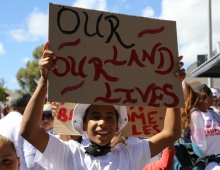
The demand for its return is an attempt to overhaul the socio-economic system

The women of Cape Town remind me of the grey-blue mountains that hug our shores. They are forever present. They have been here for thousands of years giving life to those who have lived and live here at the furthermost point of Africa. Their stories of times gone by shape the present. Past energies cling to the mountains and the old trees, perhaps remnants of when they wandered freely along these shores, seeking shelter in the mountain caves and leaving their footprints in the sand. They lived...

Human remains kept by German institutions as part of their colonial loot were repatriated to Namibia at the end of August 2018– the third time this has been done. And once again, the process was marred by serious friction, a clear illustration that both the German and Namibian governments have not come to terms with the problems involved. Most human remains that had been taken from Namibia were from people killed during the genocide between 1904 and 1908, or related atrocities under German...
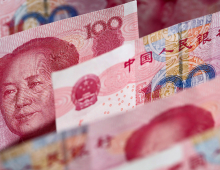
The Journalist’s financial analyst, Alrick Sangster, explains

Building solidarity across class divides will take more than a march

Whites are reluctant to think about the implications of colonialism and Apartheid

“No one deserves to be raped”. These words will remain as one of the reminders of the violence against women’s bodies, their suffering, trauma and depression in the history of our country. The words were the caption of Khensani Maseko’s last post on her social media page before she took her life. They are cries for help that remain a living voice of Khensani’s call to the country to unite in healing the wounds of the women that are raped, abused and shamed daily by men. Moreover, they are...

Trump turned himself into a movement

There is no reason to subject women to situations that force them to be strong
Rooted in a mentality that blacks are ‘non-persons’

Slavery and the Zanj Rebellion

The Thuma Mina – Send Me message became a universally understood language when all at the 16th Nelson Mandela Public Lecture and around the globe had an opportunity to listen to a wealth of oratory gifts. Phindile Xaba was at the momentous event. A throng of over 15 000 members of the public came out, braving rather chilly Johannesburg weather, not only to listen to the gifted oratory tribute to Tata Madiba by former and 54th President of USA, Barack Obama, but also to celebrate South African...

The Journalist publishes an extract of MISTRA’S Joel Netshitenzhe’s keynote address at the gathering of BRICS universities at Stellenbosch University on 5 July 2018. The address was entitled “Opportunities and challenges in ushering a new global order: Role of the Brics Network University.” The BRICS NU currently comprises 55 universities from the 5 BRICS countries. Each BRICS country can nominate to a maximum of twelve of its universities to participate in this network. The BRICS NU is not a...

South Africa remains the most unequal society in the world

The full address of Nelson Mandela Foundation chairperson Professor Njabulo Ndebele at the 16th Nelson Mandela Annual Lecture. Former US President Barack Obama delivered the 16th Nelson Mandela Annual Lecture, in partnership with the Motsepe Foundation, in Johannesburg on Tuesday 17 July. President Ramaphosa President Obama Mme Machel Mr Patrice Motsepe Distinguished guests Ladies and gentlemen On behalf of the trustees and staff of the Nelson Mandela Foundation, I welcome you to this, the...

Women will lead a total shutdown of the country
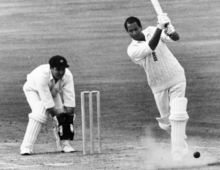
Jimmy Atkins, South Africa’s best sportswriter of the 1970s, struck a chord among the vast majority of the country’s cricketers and cricket fans who fought so bravely and stubbornly against apartheid sport, when he penned a tribute to Saait Magiet shortly after the great all-rounder’s death in the middle of July. “I followed hundreds of cricketers in my time, traveled with them, and watched them bring the game to life under sometimes appalling conditions – and Saait ranked up there with the...

When The Journalist project began late in 2013 South Africans were marking the first anniversary of the Marikana massacre, Thuli Madonsela’s initial report on Nkandla was leaked to the media and Nelson Mandela lay dying. After many months of planning and brainstorming The Journalist, a unique online resource was launched the following year. As we celebrate the Centenary Edition, it is worth taking a step back to contemplate the media reality that motivated the founder and publisher Zubeida...

In an exclusive interview with DOUGIE OAKES last week, Cape Town Mayor Patricia De Lille opened up about the inner workings of the party that is desperately trying to get rid of her. Patricia De Lille oozes confidence and energy as she strides into a meeting room adjacent to her office on the sixth floor of Cape Town’s City Hall. She greets everyone warmly, including two members of the Junior City Council. Then, after ordering coffee, she’s ready to speak. It is exactly one week before the...

Where the land question is so real and kicking, one ought to ask: what is the position and role of traditional leadership in constructing a systematic approach towards resolving a formidable issue of land expropriation without compensation? Are they in support of or against land expropriation without compensation? Since the inception of democracy in 1994, the land reform mechanism proved its inefficacy to address the contentious issue of unequal distribution of land and its awful consequences....

President Cyril Ramaphosa applauded The Journalist team this month for mentoring “the next generation” and developing a site to be used as a South African and African resource and repository. Dear Shepi and Zubeida, I congratulate you and your team for publishing this 100th edition of The Journalist. I understand your team has in the main worked voluntarily to create this multimedia website linking journalism and communications schools throughout the country. This is a great example of the...

Will government continue to pursue nuclear energy despite the exorbitant cost? And if it does, will the procurement process be more open and transparent than it was under the Zuma administration? Whether government will engage with and listen to the concerns of its people, when it comes to the controversial topic of nuclear energy, is yet to be seen. December 2017 marked the beginning of significant political changes in South Africa. Former President Jacob Zuma was replaced by Cyril Ramaphosa...

The Journalist publishes its 100th edition today (28 June 2018). This is no mean feat for a multi-media team that mainly works voluntarily. Students, academics and experienced journalists make up the list of over 300 contributors. Four years ago, I set up this multi-media website when I became aware that students at the University of Free State were unaware of South Africa’s pioneer journalists. They could be forgiven if they graduated without any knowledge of Sol Plaatje or Kabbo or even...
Today we are proud to celebrate our 100th edition. Just four years on The Journalist has filled a niche spot in the South African media landscape and the overarching goal has been threefold: helping young journalists tell their own stories, unearthing pioneers who have been written out of history and encouraging diversity in African storytelling. By working closely with students, and helping them find their own voices, they have been given the power to tell the stories of themselves, their...

The Journalist is a ground-breaking media project that provides history and context for key issues facing South African journalists. The Journalist is an independent, not for profit organisation working with the academic community and a range of credible online entities to make knowledge more accessible to the wider public. We don’t only tell you what happened. We help you understand why.
We want our stories spread far and wide. Feel free to republish our articles, but please credit our writers and authors and credit The Journalist at the top or bottom of the article complete with a hyperlink back to the site.
The Journalist is a non-profit organisation and relies on public funding. Please consider donating to ensure more issues in the future.
Account name: The Journalist / Bank: Standard Bank
Branch Code: 026209 / Account number: 270320830


