Ward 19, East London, Eastern Cape


Never in history has it been so easy to accumulate information. A vast sea of stories flows ceaselessly through the devices at our fingertips. But some days I feel I am drowning in data that does not help me understand the world any better.
Edward R Murrow’s warning about TV in 1958 could just as well be applied to all our modern information sources:
“This instrument can teach. It can illuminate and, yes, it can even inspire. But it can do so only to the extent that humans are determined to use it towards those ends. Otherwise, it is merely wires and lights in a box.”
It is what we do with the information at our disposal that determines our destiny.
I once had a news editor when I worked on a small broadsheet newspaper in Cape Town who would cut me down to size by reminding me that my feverish efforts at storytelling would soon be “fish n’chips wrapper”. Undeterred I sat at my Olivetti typewriter for hours until I was happy with the stories.
In 2014 when we launched The Journalist we had a section called News. Our aim was and is to explore the meaning behind the lights and wires. To avoid at all costs becoming electronic ‘fish n’chips wrapper’.
Since then, we have chosen to rework this section of our website and in line with our updated approach it is called SPOTLIGHT. It is a name that evokes images of performers plucked out of the darkness of the stage and bathed in light so that the audience can revel in their artistry.
Spotlight will feature the artistry of our finest writers. Their brief will be simple. Don’t merely tell us what happened. Help us understand why.
If you have an idea for a Spotlight story please engage in the discussion or use the Contact Us page to write and let us know what you are thinking.
If we are indeed the end result of all the stories we’ve heard, as Tim Knight says, choose carefully. The Journalist is committed to help you make that choice and to shed light on the 21st Century clutter.
Ward 19, East London, Eastern Cape
Ward 10, Sterkspruit, Eastern Cape

Ward 13, Thembalethu, George, Western Cape

Ward 6, White City, Postmasburg

Ward 33, Molapo, Soweto, Gauteng

The past, present and the future of local government
In our mid-month edition, we carry this thought-provoking column by Pierre Heistein, which first appeared in Business Report. Last week came with the release of this year’s Social Progress index and once again, South Africa didn’t fail to make life difficult for anyone trying to measure quality of life. The index measures a number of indicators – both economic and social – and compares countries to their closest peers in terms of gross domestic product (GDP) per capita. In South Africa’s case...

On Monday, the Acting CEO of the SABC, Jimi Matthews, resigned with immediate effect in protest against deteriorating journalistic conditions at the public broadcaster. His unexpected resignation and his admission that he had incorrectly thought he could make a difference by remaining at the corporation adds many nails into the coffin of the present leadership. He is one of the country’s most experienced and outstanding broadcast journalists. Pre-1990, the SABC was an authoritarian top down...

The Journalist reporters

Keyan Tomaselli Academics can change the world. But there is a rider, says Savo Heleta, in The Conversation. Academics must stop talking (only) to their peers. Heleta’s post elicited the usual rambling responses, mostly missing the point, plus one connecting the story with my February Griot column. Heleta observes that academics are not rewarded for engaging with the public. Rather, academics are unrelentingly chased by their increasingly remote managers to publish. They are unrewarded when...

UCT course implies Africans have made no contribution to knowledge creation
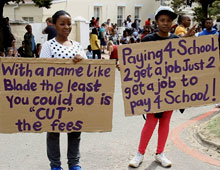
Universities are any nation’s key public institutions of knowledge development. They drive research, teach students and supervise postgraduates. By producing and disseminating knowledge, universities can fulfil their mandate as institutions of social, economic, cultural and intellectual development for democratic societies and the global environment. It’s not easy to reconcile the costs of education with narrow economic goals alone. The remit of education is simultaneously individual, social...

45 years since their eviction from their island home by the USA and Britain

The United Kingdom’s referendum last week, on the decision to leave the European Union sent shockwaves throughout the world. UK voters made their voices heard and what followed was a weakened Pound, and British Prime Minister David Cameron announcing his resignation. Tim Knight recalls the bloody wars of Europe and what Brexit means for peace in the region. Just four years ago the European Union (EU) was awarded the prestigious Nobel Peace Prize for advancing the causes of peace,...

The term on everyone’s lips and fingertips

‘There is nothing more powerful than an idea whose time has come’.

The year 1976 will always be remembered as the year when the schoolchildren of Soweto rose up against Apartheid education. Interestingly, it was also the year when television first came to South Africa. ENCA television anchor, Freek Robinson was a junior reporter at the South African Broadcasting Corporation (SABC) television at the time. He recalled that at the end of the first day of the uprising on June 16, 1976, the newsroom was fully aware that the schoolchildren were marching against...
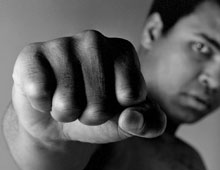
Rabbi Michael Lerner’s full speech during memorial service for the late icon

Journalists and activists remember June 16

“The Kings decree that we must work and die”

Climbing the ladder of economic development

“Knowledge about the continent provides strong transformative power”

Allegro Dinkwanyane joins the team.

These are difficult days. All around us there are multiple manifestations of the politics of rage. Our strikes are violent, as are our service delivery protests. Student ferment has been on the rise, and has in many cases also turned violent. Our public discourse and electoral campaign rhetoric are similarly replete with militaristic language and violent imagery. The rage is of course understandable. Many have warned us for a long time that the extreme levels of inequality, which have only...

The Journalist is a ground-breaking media project that provides history and context for key issues facing South African journalists. The Journalist is an independent, not for profit organisation working with the academic community and a range of credible online entities to make knowledge more accessible to the wider public. We don’t only tell you what happened. We help you understand why.
We want our stories spread far and wide. Feel free to republish our articles, but please credit our writers and authors and credit The Journalist at the top or bottom of the article complete with a hyperlink back to the site.
The Journalist is a non-profit organisation and relies on public funding. Please consider donating to ensure more issues in the future.
Account name: The Journalist / Bank: Standard Bank
Branch Code: 026209 / Account number: 270320830


